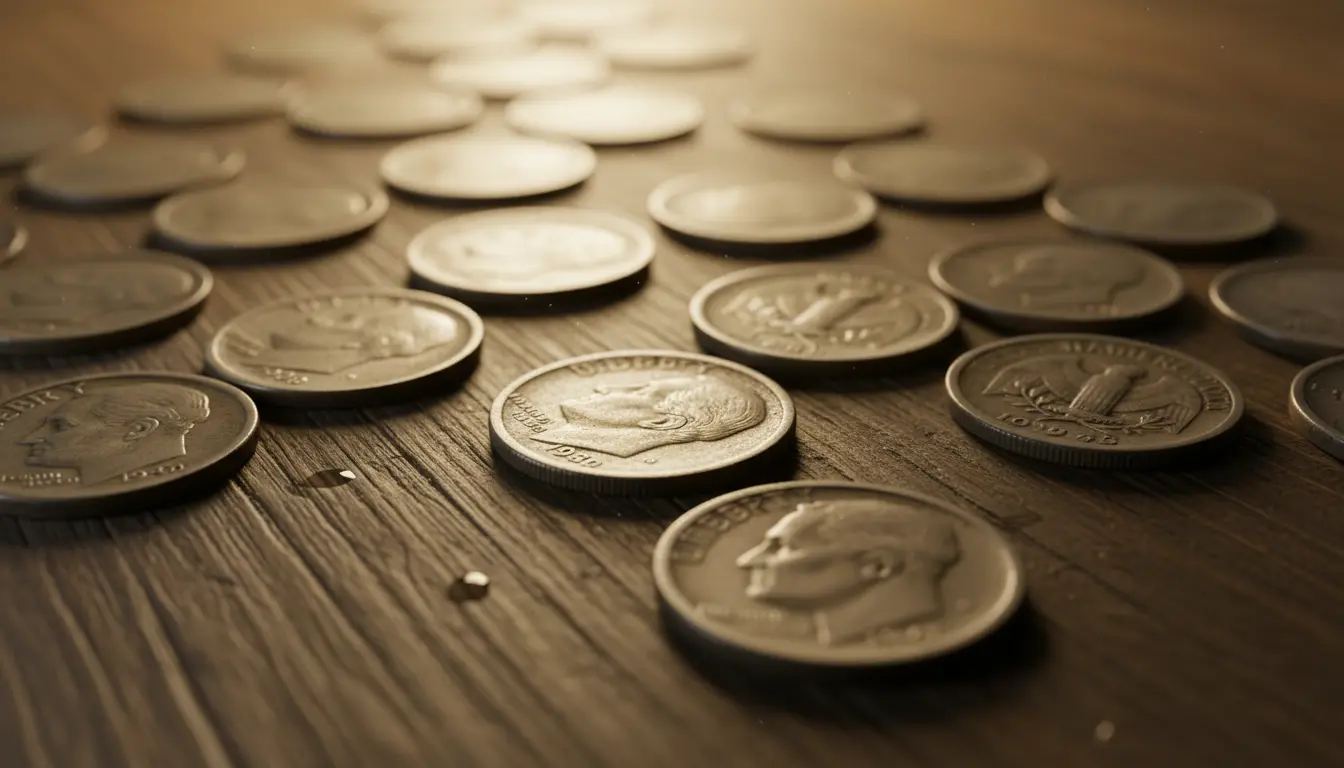
Why rare dimes and quarters can be worth millions
Most dimes and quarters you find in circulation are common and worth face value. A small number, however, were struck in limited quantities, have unique errors, or survived in exceptionally high condition and now command collector prices far above face value.
Rarity, historical significance, and condition (grade) are the three main drivers of value. A single recognized example can attract deep-pocket collectors and auction houses, pushing prices into the hundreds of thousands or even millions.
How to check your change for rare dimes and quarters
Checking change is straightforward if you know what to look for. You only need a magnifier, a steady light, and a reference list of key dates and mint marks.
Follow these simple steps every time you check coins:
- Look at the date on the coin. Faint or off-center dates can indicate an error or a worn rare date.
- Find the mint mark (usually a small letter). Common marks include D (Denver), S (San Francisco), and O (New Orleans on older coins).
- Inspect the coin for minting errors: double dies, off-center strikes, clipped planchets, and broadstrikes.
- Assess surface condition: look for scratches, corrosion, and remaining luster. Higher grade equals higher value.
Tools you should use
Good tools make identification quick and reliable. A 10x jeweler’s loupe, a soft cloth, and a portable coin light are enough for basic inspection. Smartphone macro photos can help record details before consulting an expert.
Common dates and mint marks to watch on dimes and quarters
Certain dates and mint marks routinely appear on collectors’ watchlists. These are not exhaustive but are a practical starting point.
- 1894-S Barber Dime — extremely rare: only 24 were minted and a few survive. High-grade examples have achieved seven-figure prices.
- Early Draped Bust and Capped Bust quarters (late 1700s–early 1800s) — very scarce in high grade and often very valuable.
- 1932-D and 1932-S Washington Quarters — much rarer than the 1932 Philadelphia issue, especially in high grades.
- Mint error dimes and quarters — double dies, off-centers, and overstrikes can add significant premium if authenticated.
How condition affects value for rare dimes and quarters
Condition is described by a numeric or phrase grade (for example, Mint State 65). Two coins with the same date and mint mark can differ wildly in value depending on wear, luster, and eye appeal.
Collectors and grading services like PCGS or NGC provide consistent grading and authentication. A certified coin typically sells for a higher price than the same type sold raw.
Practical grading checklist
- Check for original luster and sharp details on hair, eagle feathers, and lettering.
- Look for contact marks and scratches; minor marks lower value but heavy marks sharply reduce it.
- Note any cleaning or polishing — altered surfaces greatly reduce collector interest.
The 1894-S Barber dime had just 24 coins minted. A few examples that survive are among the most valuable American dimes, with one selling for about $1.9 million at auction.
What to do if you find a potentially valuable dime or quarter
If you think you’ve found a rare coin, handle it carefully. Hold coins by the edges, avoid cleaning, and keep them separated in soft holders to prevent damage.
Next steps include documenting the find with high-resolution photos, noting date and mint mark, and consulting reputable references or price guides to get a preliminary idea of value.
Where to get an expert opinion
- Local coin dealers with good online reviews and professional affiliations (ANA, PNG).
- National grading services (PCGS, NGC) for authentication and grade verification.
- Trusted auction houses if you plan to sell — they can provide estimated values and sell to an international bidder base.
How to sell a rare dime or quarter
Selling options include local dealers, coin shows, auction houses, and online platforms. Each route has trade-offs in fees, speed, and final sale price.
For items suspected to be very valuable, professional grading and consigning to a respected auction house is often the best way to maximize return and safely reach serious collectors.
Checklist before selling
- Get a professional grade and certificate if the coin is rare or high grade.
- Obtain at least two independent appraisals to set realistic expectations.
- Keep documentation, photographs, and any historical provenance you can gather.
Real-world example: the 1894-S Barber dime
Case study: The 1894-S Barber dime is a textbook example of a low-mintage coin turning into a headline auction item. Mint records show only 24 were struck, and only a handful survive in collectible condition.
One known specimen sold at auction for approximately $1.9 million in 2007. The sale highlights how extreme rarity combined with collector interest and excellent condition can produce seven-figure results.
Quick tips to check your pockets and piggy bank
- Sort coins by date and mint mark when checking a lot of change.
- Keep a magnifier and a small notebook or phone camera handy to document finds.
- Don’t clean coins — cleaning can destroy value and make authentication difficult.
- When in doubt, ask a reputable dealer or use an online coin community for initial feedback.
Regularly checking change is an easy habit that sometimes pays off. Rare dimes and quarters are uncommon, but a careful eye and the right next steps can turn a pocket discovery into serious value.