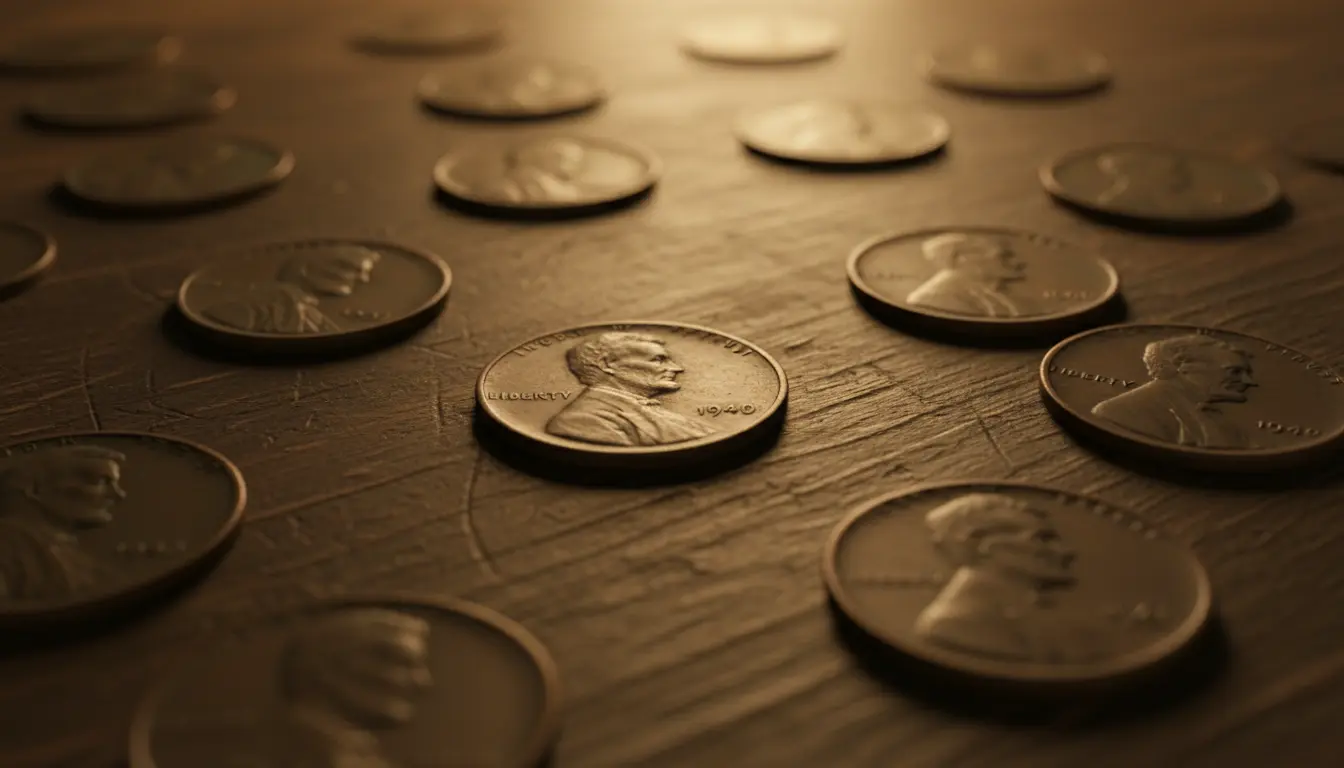
Top 11 Rare Pennies of the Twentieth Century: Quick Guide for Collectors
This guide lists the most sought-after twentieth century pennies, explains why each is rare, and shows practical tips for identification and grading.
Each entry focuses on recognizing key features, common error types, and what to check before buying or selling.
1. 1909-S VDB Lincoln Cent
Why it’s rare: Early Lincoln cents with Victor D. Brenner initials (VDB) on the reverse were removed shortly after release, making surviving pieces scarce.
What to check: Look for the bold VDB initials on the reverse and San Francisco mint mark on the obverse. Condition drives value—uncirculated examples bring the best prices.
2. 1909-S Lincoln Cent (No VDB)
Why it’s rare: The 1909-S without VDB was produced after initials were removed and has lower survival in high grades than later common dates.
What to check: Confirm the S mintmark and compare strike quality; look for high points like Lincoln’s cheek for wear.
3. 1914-D Lincoln Cent
Why it’s rare: Denver’s 1914 output was small compared with other years, and this date is a classic key for Lincoln cent sets.
What to check: Verify the D mintmark and watch for damage—even modest wear lowers the market dramatically.
4. 1922 Plain (No D) Lincoln Cent
Why it’s rare: Many 1922 cents have a lightly impressed D mintmark caused by filled dies; truly plain examples (no D) are scarce.
What to check: Inspect the reverse for any mintmark impression. Lighting at a low angle reveals faint die features better than flat light.
5. 1931-S Lincoln Cent
Why it’s rare: Low mintage at San Francisco makes the 1931-S a key date, particularly in XF and above.
What to check: Look for a clear S mintmark and strong hair and beard detail on Lincoln’s profile.
6. 1943 Bronze/Copper Lincoln Cent
Why it’s rare: Most 1943 cents were steel due to wartime copper needs. A small number were mistakenly struck on bronze planchets, creating high-value error pieces.
What to check: Copper color and magnetic tests help—1943 bronze cents are not magnetic, unlike the common steel cents.
7. 1944 Steel Lincoln Cent
Why it’s rare: The reverse error—1944 cents struck on leftover 1943 steel planchets—are scarce and highly collectible.
What to check: Steel cents are magnetic and appear silver-gray; confirm date and composition before assuming rarity.
8. 1955 Doubled Die Obverse
Why it’s rare: One of the most famous doubled-die errors, the 1955 DDO shows obvious doubling on the date and legends and is highly visible without magnification.
What to check: Examine “LIBERTY” and the date for strong replications of letters. Proven examples command strong collector demand.
9. 1969-S Doubled Die Obverse
Why it’s rare: A rarer doubled-die from the San Francisco mint, often found only in mint state or proofs; genuine examples are scarce.
What to check: Use magnification to confirm doubling on the date and inscriptions. Authentication by a third-party grading service is common and recommended.
10. 1974 Aluminum Pattern Cent
Why it’s rare: Aluminum pattern cents were tested but never released for circulation. Surviving pattern strikes are limited and treated as collectibles rather than regular issues.
What to check: Patterns often have unusual weight, color, and sometimes different die designs. Documentation and provenance add value for these nonstandard pieces.
11. 1992 Close AM Lincoln Cent (Notable Variety)
Why it’s notable: Close AM and Wide AM varieties affect collectors building specialized Lincoln cent sets. While not as scarce as classic keys, specific mint and grade combos can be valuable.
What to check: Inspect the spacing in “AMERICA” on the reverse—variety guides and magnification identify Close vs. Wide AM differences.
How to Evaluate and Protect Rare Pennies
Authentication and grading matter. Use reputable third-party graders for high-value coins and keep them in inert holders to avoid damage.
Practical steps for handling: wear cotton gloves, avoid cleaning, and store coins flat in acid-free holders or capsules.
Quick Checklist Before Buying
- Confirm date and mintmark under magnification.
- Check for doubling, mint errors, or unusual planchet color.
- Ask for provenance or third-party grading on high-ticket items.
- Compare market prices from recent auctions before offers.
The 1955 doubled die obverse was discovered soon after release and is one of the most copied or counterfeited varieties—always verify doubling patterns against trusted references.
Small Real-World Example
A local collector once found a 1955 doubled die obverse in a box of circulated coins purchased at a flea market. After third-party authentication, the coin sold at auction to a specialist collector.
This example shows how careful inspection and proper authentication can turn an inexpensive purchase into a significant sale for both hobbyists and serious collectors.
Final Tips for Collectors of Twentieth Century Pennies
Start by focusing on a few key dates and error types. Build reference books, join collector forums, and compare notes with experienced collectors.
Remember: condition, authenticity, and provenance determine real market value. When in doubt, seek a professional opinion before buying or selling.